



British State Banquet Menu Highlights Royal Elegance
British state banquet menu at Buckingham Palace wowed guests with exquisite dishes using the finest local produce. With a focus on seasonal, local ingredients and thoughtful presentation, the event was a celebration not just of diplomacy, but of culinary heritage.
British Ingredients, Royal Flair
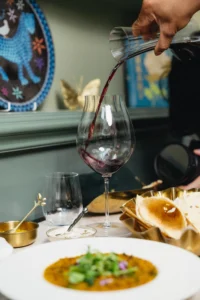 Though the banquet took place some time ago, it still stands out as a prime example showcasing British food culture. The curated menu reflected King Charles III’s deep commitment to sustainability and local sourcing. Moreover, it offered a luxurious dining experience.
The visiting dignitaries, His Highness Sheikh Tamim bin Hamad Al Thani and Her Highness Sheikha Jawaher bint Hamad bin Suhaim Al Thani, enjoyed a three-course feast. It combined classic culinary techniques with contemporary touches, creating a truly memorable dining experience.
A Menu Fit for Royalty: British State Banquet Menu
The meal began with a refined starter: a delicate tartlet filled with Cornish lobster, accompanied by quail eggs and organic salad leaves. This light and flavourful beginning set the tone for what was to follow.
The main course was a masterclass in showcasing British game and vegetables. Guests enjoyed Windsor pheasant, wrapped in savoy cabbage and served with roasted celeriac purée, gratinated potatoes with Suffolk cheese, a rich truffle sauce, and a medley of seasonal winter vegetables. Every element on the plate had been selected not only for its flavour but also for its provenance and significance.
To round off the evening, guests enjoyed an iced bombe with organic Samoan vanilla ice cream. Additionally, a Balmoral plum sorbet offered a subtle nod to the Royal Family’s Scottish estate.
Culinary Experts Praise the Approach
Renowned Michelin-starred chef Rohit Ghai, whose restaurants span London and beyond, spoke admiringly of the menu. According to him, it was an excellent example of how local British ingredients can be elevated to suit a regal occasion.
“The inclusion of Windsor pheasant offers a real connection to the heritage of the Royal Family,” he noted. “Pairing it with cheese from Suffolk and a sorbet made from Balmoral plums adds thoughtful, symbolic touches to the meal.”
Chef Ghai highlighted the elegance of using high-quality, seasonal produce – a principle King Charles strongly supports. Moreover, he said it adds “a touch of opulence” without overpowering the dishes.
A Hint of Cross-Cultural Inspiration: British State Banquet Menu
While the menu firmly rooted itself in British culinary tradition, Ghai suggested that a small fusion element might have added a creative flair and further symbolised the relationship between the two nations.
Drawing on his expertise in modern Indian cuisine, he suggested adding dishes like a pheasant ghee roast. He recently introduced this at Manthan in Mayfair, and similar ideas appear at Kutir in Chelsea and Vatavaran in Knightsbridge.
“It would have been a beautiful gesture,” he said, “showing unity through cuisine.”
A Non-Alcoholic Toast to Qatar: British State Banquet Menu
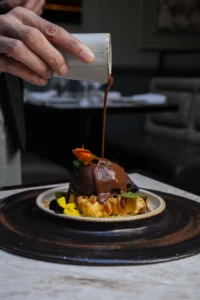 In line with the cultural preferences of the guests, the banquet also featured a specially crafted non-alcoholic drink. Dubbed the “Royal Mirage,” this unique concoction combined smoked pomegranate with ginger and a black lime garnish. The team designed it to complement the menu, and its colour palette also reflected the Qatari flag – a meaningful detail.
Bringing Royal Dining into the Home
While few will have the chance to attend a royal banquet, Chef Ghai believes that elements of such luxurious dining can be recreated at home – without the need for a palace-sized budget.
He encourages home cooks to explore their local markets, particularly those offering fresh, seasonal produce. “You don’t need to visit exclusive farmer’s markets,” he advised. “Everyday fruit and veg markets offer incredible quality at accessible prices.”
For those seeking a royal touch at home, he suggests using underused cuts of meat or vegetables. Then, use herbs and spices to elevate them, choosing ones you can store easily and reuse across multiple meals.
“Shopping seasonally not only keeps costs down,” he explained, “but ensures you’re cooking with ingredients at their very best.”
A Royal Celebration of British Gastronomy
The state banquet was more than a political affair – it was a culinary showcase, a celebration of British food culture, and a reflection of the Royal Family’s values around sustainability, heritage, and elegance. While such an event may be rarefied, it offers a source of inspiration for those who love to cook and take pride in sharing good food.
The banquet brought together British ingredients, cultural symbolism, and refined technique. As a result, it showcased food as powerful expression of diplomacy.