



Modern Indian Dining: The Global Rise of Refined Cuisine
Modern Indian dining has transformed global tastes, blending tradition with innovation to redefine fine dining experiences worldwide. What once symbolised comfort food and nostalgia has evolved into a global emblem of artistry, precision, and innovation. Across the Middle East and Europe, chefs have reimagined Indian flavours, presenting them through contemporary techniques and elevated storytelling. The result is not just a change in taste but a shift in perception-Indian cuisine has entered the fine dining stage with confidence and class.
Among the pioneers leading this culinary evolution stands Chef Rohit Ghai, whose work bridges cultures and continents. His London ventures – Kutir, Manthan Mayfair, and Vatavaran – showcase how tradition and innovation can coexist harmoniously. Meanwhile, his international successes in Morocco (Rivayat) and Oman (Aangan) demonstrate that refined Indian dining can adapt to any cultural landscape without losing authenticity.
How London Can Learn from Modern Indian Dining in the Middle East
 London’s dining scene is among the most diverse in the world, offering everything from traditional curry houses to Michelin-starred fine dining. Yet, as competition intensifies, diners now expect more than exceptional flavour. They seek narrative, ambience, and emotional connection-elements the Middle East has mastered in its approach to Indian fine dining.
Cultural Storytelling: Aangan’s Lesson from Oman
At Aangan, Chef Ghai captures the essence of India through dishes that celebrate its vast culinary heritage. Menus balance the familiar with the unexplored-guests might discover forgotten recipes from regional India alongside delicately reimagined classics. Each plate tells a story, inviting diners on a journey through culture and memory.
For London, this is a reminder that storytelling matters. While the city has no shortage of skill and innovation, some fine dining establishments risk losing the emotional depth that makes Indian cuisine so special. By placing cultural context at the heart of the experience, restaurants can achieve both authenticity and sophistication.
Atmosphere as Part of the Menu
In Oman, Aangan pairs cuisine with interiors that echo India’s aesthetic soul-earthy textures, soft lighting, and intricate details. The décor becomes part of the storytelling. By contrast, many London restaurants, though elegant, often lean on neutral, Westernised designs. A stronger connection between visual identity and culinary roots could make the capital’s Indian dining scene feel more immersive and distinctive.
Innovation in the UAE: Fearless and Forward-Thinking
The UAE has become a hub for modern Indian gastronomy, pushing creative boundaries while maintaining respect for tradition. Restaurants there experiment with deconstructed classics, molecular gastronomy, and artful plating, all while maintaining flavour integrity. Diners expect surprise and spectacle – and chefs deliver.
For London, this spirit of experimentation offers inspiration. While consistency and reliability remain vital, there’s room for more playful innovation. Introducing unexpected pairings, textures, or regional influences could redefine what refined Indian dining means in the British capital.
Modern Indian Dining: Rohit Ghai as a Culinary Bridge Between Cultures
Few chefs embody the global evolution of Indian cuisine as seamlessly as Rohit Ghai. Each of his restaurants tells a different story, yet all share a deep respect for heritage.
London Icons: Kutir, Manthan, and Vatavaran
- Kutir captures the intimacy of a hunting lodge, offering reimagined Indian classics served in an elegant townhouse setting.
- Manthan Mayfair, with its bold flavours and contemporary bar concept, reflects Ghai’s belief that fine dining should also feel vibrant and approachable.
- Vatavaran, the latest addition, leads the way in sustainability, proving that conscious dining can be both ethical and indulgent.
Each restaurant exemplifies how London’s Indian dining scene can evolve – by merging artistry with identity, and luxury with purpose.
Global Lessons: Rivayat and Aangan
Ghai’s international ventures – Rivayat in Morocco and Aangan in Oman – highlight how Indian cuisine can thrive in new cultural settings. Rivayat draws on Mughal inspiration, infusing it with Moroccan charm, while Aangan reflects regional Indian diversity through a Middle Eastern lens. These restaurants prove that adaptability does not mean dilution. Instead, it showcases how Indian fine dining can transcend borders while remaining deeply rooted in authenticity.
Modern Indian Dining: Key Takeaways for London’s Fine Dining Scene
 1. Celebrate Regional Diversity
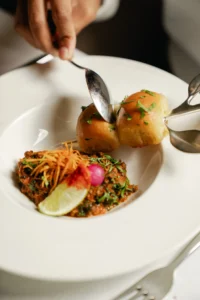
London’s Indian fine dining often leans heavily towards North Indian flavours. Yet India’s culinary map is vast – from the spice-rich curries of Kerala to the coastal delicacies of Goa and the unique dishes of the Northeast. Introducing this diversity would not only intrigue diners but also deepen appreciation for India’s regional complexity.
2. Focus on Consistency and Precision
Restaurants in the UAE and Oman often prioritise exacting standards in service, presentation, and quality control. London’s dining scene, though exceptional, could benefit from this same unwavering attention to detail. Every plate, gesture, and garnish should reflect purpose.
3. Prioritise Sustainability
Sustainability has now become a defining aspect of fine dining worldwide. Therefore, with Vatavaran setting the benchmark in London, others can follow suit by embracing seasonal produce, local sourcing, and waste-conscious practices. Moreover, diners increasingly value transparency and environmental responsibility, and Indian cuisine’s reliance on fresh ingredients naturally supports this growing movement.
A Future Built on Balance
London’s food culture thrives on evolution. Its Indian dining scene has already reached remarkable heights, yet the lessons from the Middle East show there’s more to explore. By weaving together storytelling, innovation, regional depth, and sustainability, London can continue to lead in global gastronomy while remaining true to its multicultural heart.
Indian cuisine’s journey from humble origins to haute cuisine reflects a larger truth – that food, at its best, is a dialogue between heritage and progress. And in that dialogue, London still has many chapters left to write.